Finding · Foraging ants
Ant trails, followed back to the colony
A line of ants on the counter is only the visible end of the problem. We trace the trail to where the colony lives and to the gap that let it in.
Chapter 01
A thin line along the sill, a pile of grit by the slab
In Bayville and Toms River the first sign is usually a steady line of small ants crossing a kitchen counter, climbing a window sill, or pouring out from behind the dishwasher. One wandering ant is a scout. A line means somebody has found food and the colony is recruiting, so the number you see at the sink is a small fraction of what is out in the wall or the yard.
Spring brings the biggest push, when colonies wake up and scouts begin testing every crack in the siding and every gap around a pipe. Small piles of fine grit at the edge of a patio slab, tiny craters in a mulch bed and trails running up a downspout all point the same way: the nest is close, and it is usually outside.
Pavement ants, odorous house ants and the species people call sugar ants can look alike at a glance. Size, color and where the trail starts all matter, which is why we identify before we treat. Big black ants with wings indoors in spring are a different problem, and they get the carpenter ant treatment instead.
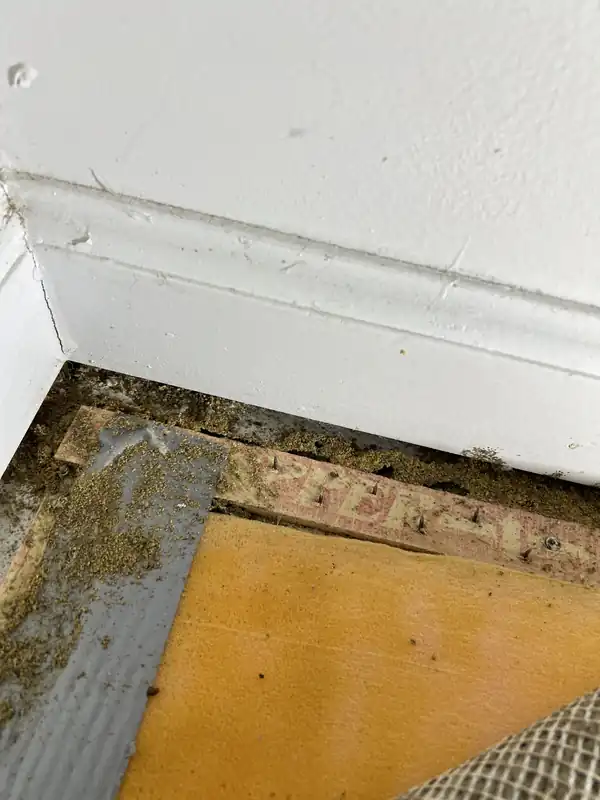
Baseboard gap packed with droppings and debris
How a visit runs from the first flashlight
The technician starts outside with a light, walking the foundation, the sill plates, the door thresholds and the places where plumbing and wiring pass through the wall. Entry points get photographed so you can see exactly where the ants are getting through. Then the inside: under sinks, behind appliances, along baseboards where a trail tends to turn a corner. The goal is the nest, not just the ants you can see.
Treatment follows the evidence. Baits go where trails run, because foragers carry them home to the colony, and a barrier goes on at the entry points we found. Wiping away the trail before we arrive undoes half the work, so please leave it be. Products are picked with children and pets in the house in mind, and naturally derived options exist through the Organic Pest Program.
We also look at what feeds them: a sticky soda spill by the patio door, pet bowls left on the floor, aphid honeydew on a shrub that touches the siding. Cutting that supply is part of the job, and we tell you which pieces are yours to fix. Most of it is plain housekeeping, and none of it needs a renovation.
Chapter 03
The weeks after, and the second spring
Expect to see more ants for a few days after baiting, not fewer. That is the bait being carried home, and the trails thin out as the colony takes it in. Please do not spray store-bought repellent over a line, because it scatters the colony into new rooms. If trails are still running after a couple of weeks, call us at (732) 527-5770.
If the result is not what you were promised, Resolve comes back and retreats the home at no additional cost. Ants tend to return to the same spot each year, so many Ocean County homeowners fold ant work into a seasonal plan and let the spring push meet a perimeter that is already treated.
Licensed & insured · NJ LIC# 91689B · 100% satisfaction guarantee
CROSS-REFERENCE · NJ LIC# 91689B
Found alongside ant control
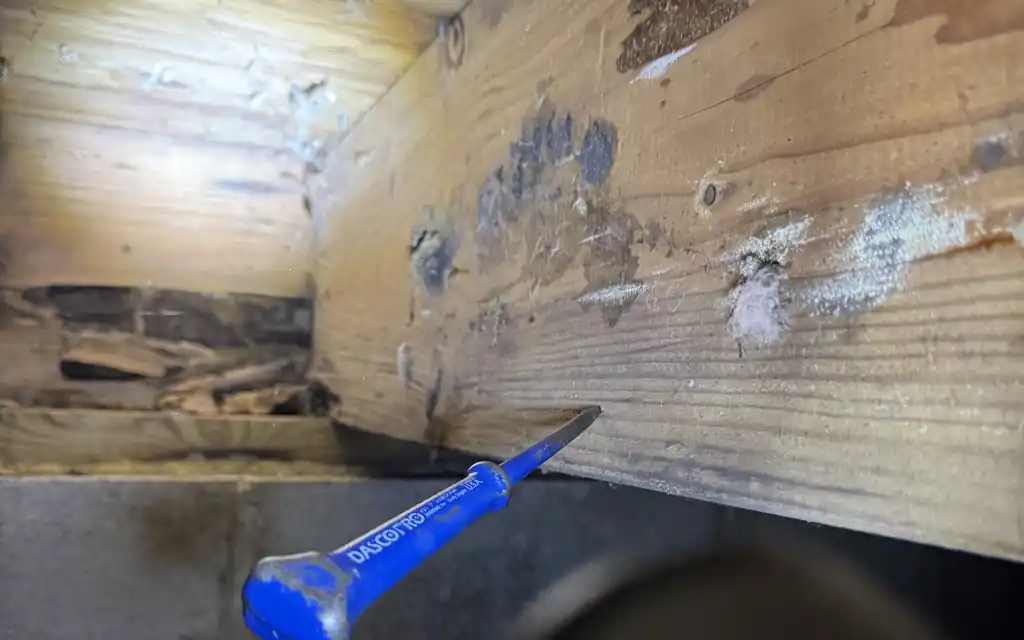
Carpenter Ant Control
Big black ants in the house? We find the nest and get rid of it.
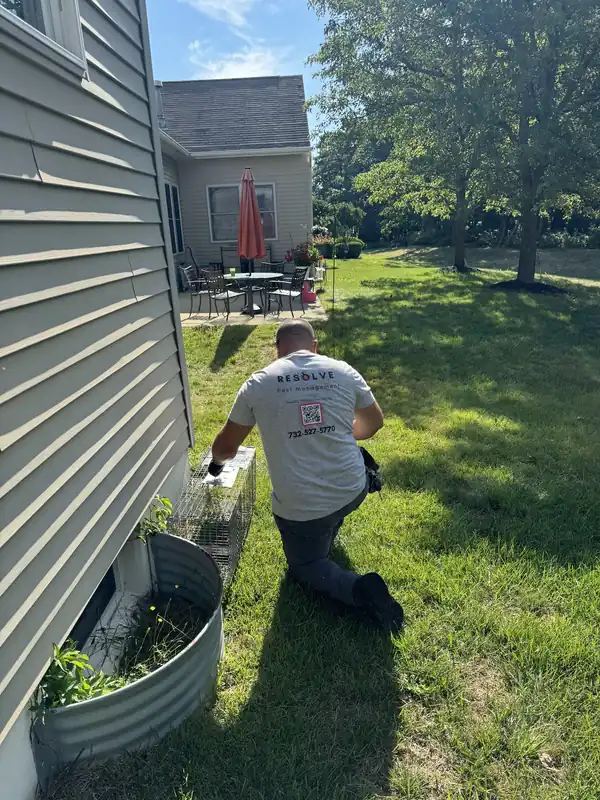
Seasonal Pest Protection Plans
Spring ants and termites, summer mosquitoes and wasps, fall rodents, winter roaches.

Organic Pest Program
Naturally derived products with low impact on people and pets, starting with a home assessment.