Finding · Raccoons
Raccoons out of the attic, and the way back in closed
Thumping overhead at dusk, torn soffit, a lifted shingle edge. Resolve traps the raccoon and closes the opening it used.
Chapter 01
Heavy footsteps at dusk, a torn soffit, a displaced vent cover
Raccoons are strong and curious, and they leave evidence a mouse never would. Thudding overhead around dusk, a vent cover bent outward, a chewed fascia board, a chimney cap pried loose, or a neat latrine pile in a corner of the garage. Attics in Manahawkin and Beachwood are common targets, as are sheds and the space under a deck.
The animal is rarely the full story. A raccoon that gets into an attic tears insulation, flattens it into a nest and soils it. Spring is the usual time for it, when a mother wants a dry, protected den for her young, and that detail changes how the removal has to be done.
Outside the house, the clues are different: tipped bins, muddy handprints on a window sill, a pried-open pet door, a pond emptied of fish. If the same trash can is turned over every few nights, the animal has already learned your property and will go up on the roof next. Even a small hole in a fence or gap in a shed can serve as a doorway for an animal of that size.
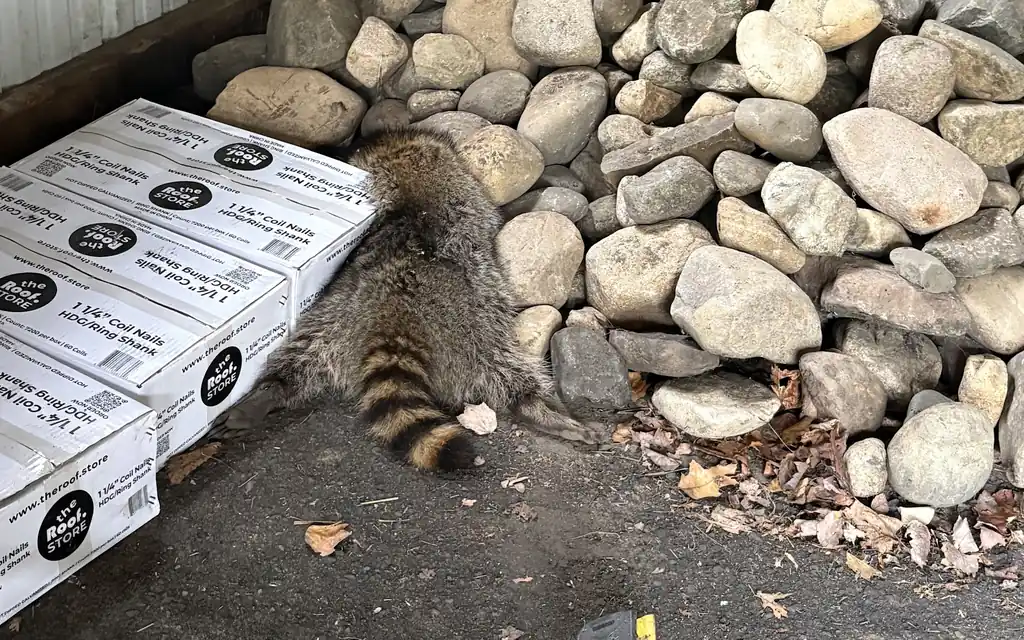
Raccoon backing into a stone pile inside an outbuilding
Find the door they used, set the live-catch trap, check it, then close up
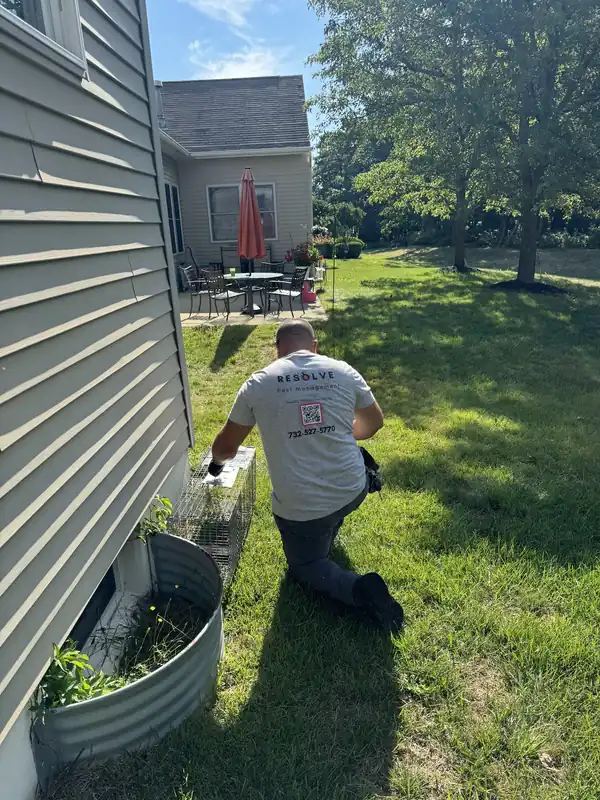
The visit begins with the evidence: where the animal enters, how it gets onto the roof, what it has done inside. A technician follows the line from the ground up. Resolve's wildlife work is trapping and removal, using live-catch cage traps set at the entry route and checked regularly, as shown by the technician kneeling at one beside a foundation.
Timing around young animals is important, and the technician will tell you plainly what is known about your situation before anything is set. A trap alone can separate a mother from kits left in the attic, so the plan accounts for them before the trap goes out. Neither the home nor the animal benefits from a rushed removal, so the plan is slower on purpose and the technician explains each step.
Once the animal is gone, the opening is sealed with materials a raccoon cannot pull apart. Closing the door is the step that separates a repair from a repeat call, and the technician shows you the finished work so you know where it is. It is also the part you can check yourself, because a clean metal patch is visible from the driveway with a flashlight. Ask to be shown the finished repair before the crew leaves.
Chapter 03
After the trap: attic condition, a second look, and the same crew on call
Once trapping is complete, ask the technician to note what the animal left behind, because soiled insulation and droppings are an attic concern in their own right. The sealed entry gets looked at again, to confirm nothing has been tested or chewed. That note can be shared with an insulation contractor, and it keeps the conversation about the attic factual and calm.
The 100% satisfaction guarantee applies: if you are not satisfied, Resolve comes back and retreats your home at no additional cost. Wildlife jobs run on the animal's schedule rather than ours, which is why a promise like that is more useful than a fixed-visit package. If a second animal turns up, the answer is the same: a phone call, a return visit and no new charge for the retreat.
Brick, Barnegat and Waretown owners usually call (732) 527-5770 at the first night noises. Resolve is family owned, open 24 hours, licensed and insured under NJ LIC# 91689B, and the crew that sets the trap is the crew that comes back to check it. The crew is local, based in Bayville, and the office line is open all night.
Live-catch traps checked on schedule, entry point closed.
CROSS-REFERENCE · NJ LIC# 91689B