Perimeter · Station line
A Tamper-Resistant Station Line Along Your Fences and Foundation
Stations set along fence lines and foundation walls give the property a year-round rodent perimeter, so mice and rats meet a station before they meet your siding.
Chapter 01
Rub marks on the siding and a path through the mulch
Rodents leave a map for anyone who knows how to read it. Greasy rub marks along the bottom of a vinyl wall, a smooth runway worn through the mulch beside the AC pad, burrow holes under a shed slab, droppings behind the recycling bins. In Toms River and Brick, where many lots back onto wooded easements, those runs usually start at a fence line and end at your foundation.
Nothing indoors has to be wrong yet for the outside to be failing. A mouse that has never been inside still needs a reason to turn around at your wall, and without one, every gap at a dryer vent, utility penetration or rotted garage sill is an invitation. Fall is when they accept it, usually the first properly cold week.
Homeowners in Point Pleasant and Seaside Heights tell us the same thing: the dog kept fixating on one corner of the yard. Dogs find the run before people do. That is a good moment to call, because the cheapest rodent problem is the one that is still outside the wall, and a station line can hold it there.
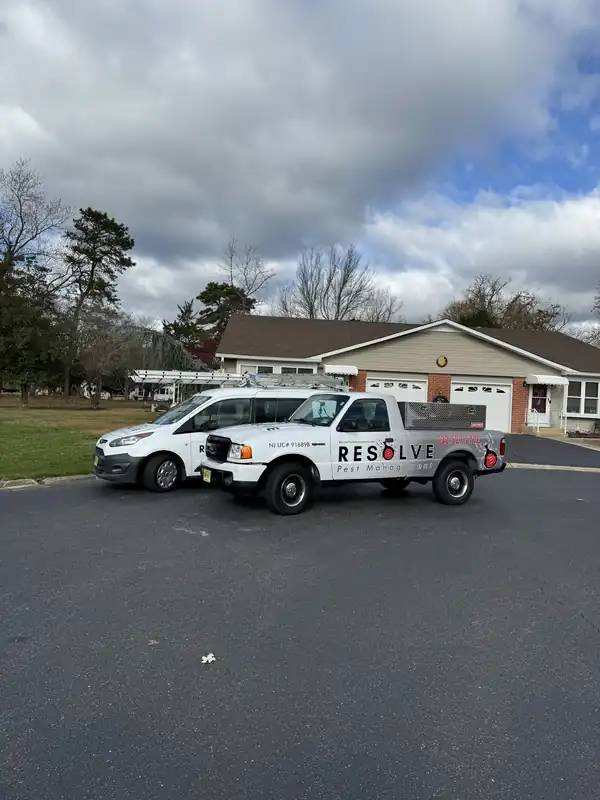
Resolve pickup and van parked at a ranch house driveway
Walking the line before a single station goes down
A technician walks the entire property first: fence lines, foundation, steps, decks, sheds, the corners where two walls meet. Every gnaw mark, burrow and dropping gets noted, because stations belong where rodents already travel rather than where it is convenient to set them. Close to the structure, tight against the wall, in the shadows they prefer.
The stations themselves are tamper-resistant: closed housings that children, pets and non-target wildlife can't open. Each one is anchored so wind, a raccoon or a lawn crew can't carry it off, and each gets a number on the visit sheet so we know exactly which box showed activity. Work is done under NJ LIC# 91689B, and the numbering is how we read the line later.
Where a station shows heavy feeding, the technician looks for the reason nearby. That usually means a gap to seal or a food source to move, such as a bird feeder dropping seed onto a deck in Lakewood. A perimeter line controls the population outside; closing the structure is what keeps the rest of it from coming in.
Chapter 03
Why the line stays in place in January
The perimeter is meant to run year-round, not for one season. Rodent pressure climbs when cold pushes animals toward warm structures, so a line that was only there in August would be missing in the exact weeks you need it. Stations are checked on a repeating schedule and refilled when they have been fed on.
What the checks show is useful on its own. A quiet station in spring is a good sign; a cluster of activity at one corner points to where a hole is forming. If you ever see signs inside the house, rodent control and exclusion are the next step, and the same crew handles that work too.
Quotes are free and carry no obligation, and the 100% satisfaction guarantee applies: if you are not satisfied with our service, we will come back and retreat your home at no additional cost to you. Call (732) 527-5770 and describe what you've seen along the fence line or foundation, and we will tell you whether stations are the right answer.
Numbered, tamper-resistant stations, logged by number on every visit sheet.
CROSS-REFERENCE · NJ LIC# 91689B
Found alongside exterior rodent bait stations
Rodent Control
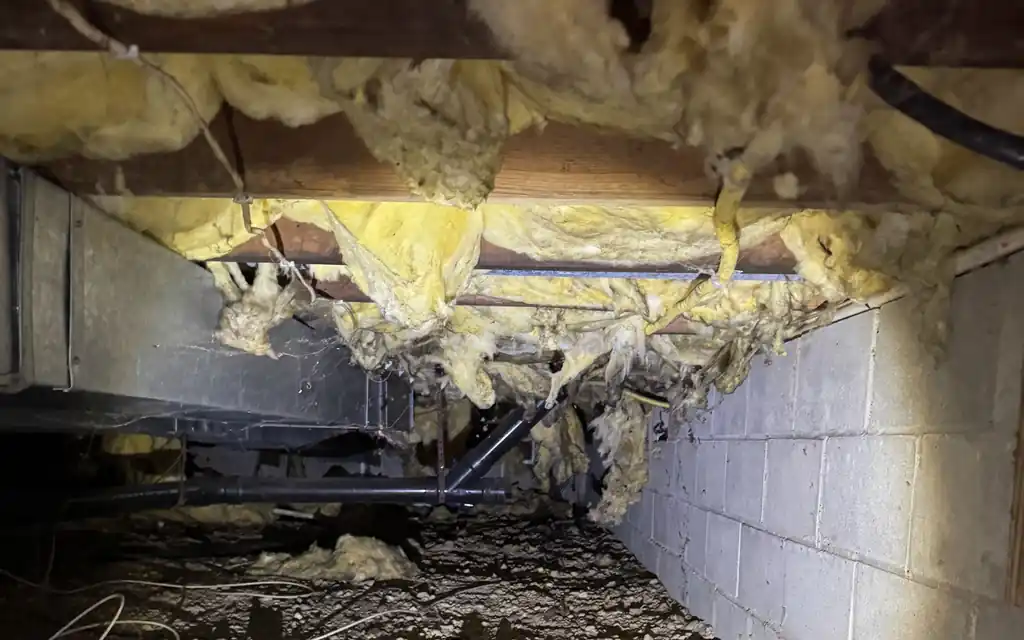
Entry points and nesting found, trapping and baiting out of reach, exclusion to seal them out.
Crawl Space & Basement Pest Control
The dark, damp places pests live first, inspected with a light and photographed.
Seasonal Pest Protection Plans
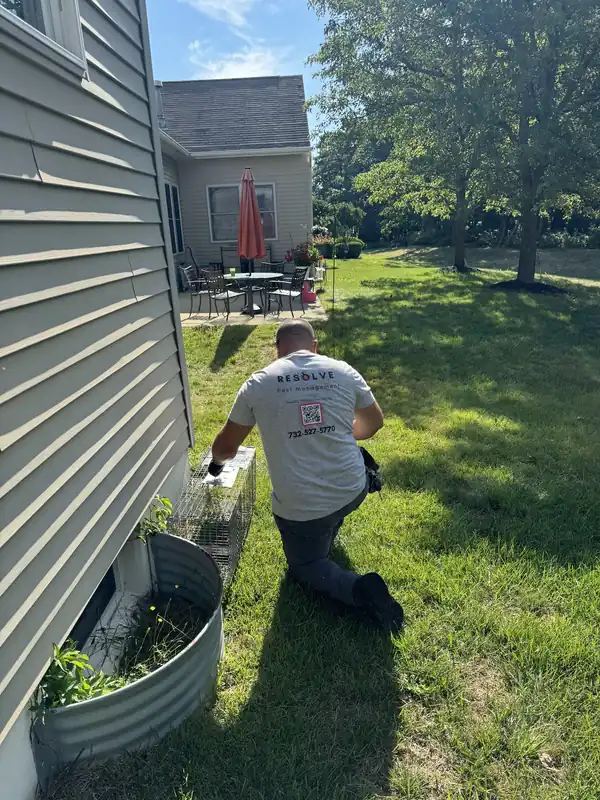
Spring ants and termites, summer mosquitoes and wasps, fall rodents, winter roaches.