Finding · Centipedes and millipedes
Centipedes and millipedes from the damp side of the house
Neither one is looking for you. They follow moisture into basements and crawl spaces; dry the space, treat the perimeter and they leave.
Chapter 01
A many-legged visitor on the basement floor
In Whiting and Jackson, where the soil stays wet and basements run cool, people find them on the floor after rain. House centipedes are fast, long-legged and gray-brown, darting across a wall as they hunt other insects. Millipedes are slower, rounder and shiny, and curl into a coil when touched; they feed on decaying plant material.
Neither is a threat to the house. They are indicators. A centipede means there is prey: silverfish, roaches or spiders in the same space. A cluster of millipedes crawling in from the mulch bed means a wet perimeter and rotting leaf litter against the foundation. Read what you are seeing as a message about conditions, not about the animal.
Dead millipedes on window sills and in garage corners after a wet spell are common, and you will find them in groups. That is a sign of how many are moving at the foundation, not how many live inside. A crunchy pile under the garage door often turns out to be a single night's migration after a storm, and it can happen again the next time the ground floods.
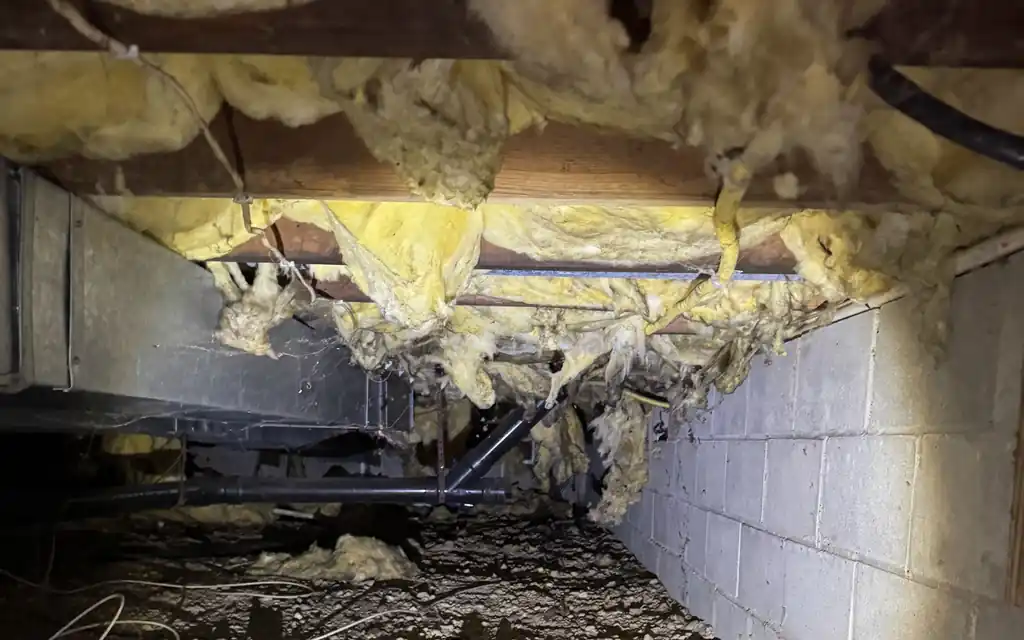
Crawl space with insulation pulled down from the joists and a block wall
Drying the space, then treating the edge
On a visit we look at moisture first: downspouts that end at the foundation, mulch piled against the siding, window wells holding water, a slow sump, a crawl space with no vapor barrier. Those get photographed and explained, because they are doing the inviting. A basement that smells of earth and stays cool in August is telling us the same thing the bugs are.
Treatment follows. A perimeter application along the foundation and entry points keeps millipedes outdoors, and treating cracks and crevices inside removes the centipedes along with the insects they hunt. Treatments keep children and pets in mind, and a crawl space and basement program can extend the work if the moisture cannot be fixed quickly.
Centipedes are the slower fix, because they hunt the other insects in the house. Clearing out the silverfish and roaches that feed them is what finally removes the centipede, so the inspection pays attention to the whole food chain in the lower levels of the house, not only the animal that frightened you.
Chapter 03
When the rain comes back
Expect fewer visitors within days. Heavy rain in spring and fall sends a new group toward the house, so a few stragglers after storms are normal. Pulling mulch back from the siding and clearing gutters helps more than anything we apply, and we will say so. A few inches of bare gravel or stone between the lawn bed and the foundation gives them nothing to shelter in.
If the numbers stay up, call (732) 527-5770. Our 100% satisfaction guarantee covers a return retreat at no extra cost, and we check the moisture picture again together before leaving. Jackson and Whiting basements with a persistent damp wall often need that conversation more than a second treatment, and we are glad to have it.
Licensed & insured · NJ LIC# 91689B · 100% satisfaction guarantee
CROSS-REFERENCE · NJ LIC# 91689B
Found alongside centipede & millipede control
Crawl Space & Basement Pest Control
The dark, damp places pests live first, inspected with a light and photographed.
Camel Cricket Control
The jumping spider crickets of Jersey Shore basements and garages.
Silverfish Control
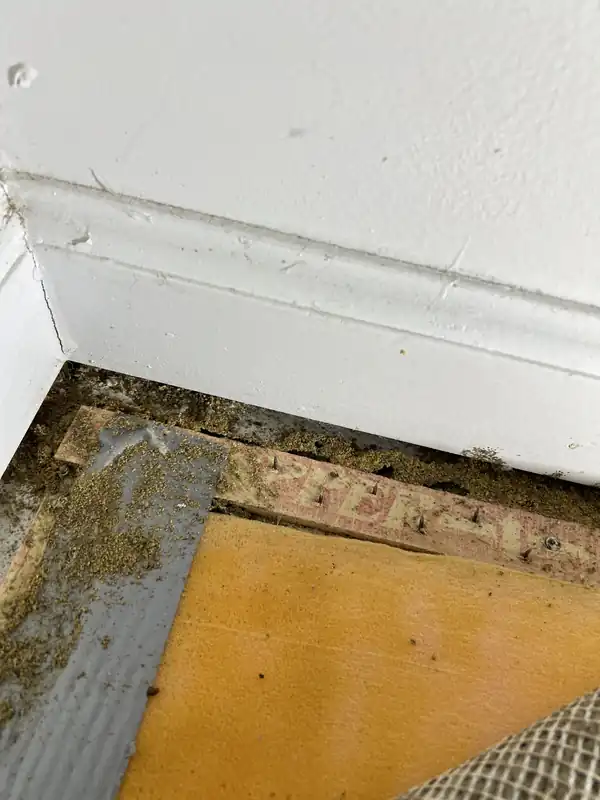
Damp bathrooms, basements and stored boxes: treat the insect and the moisture it needs.