Finding · Camel crickets
Camel crickets: the jumpers in the basement
Humpbacked, long-legged and startlingly good at leaping. They live where it is dark and damp, and they bring that habitat with them.
Chapter 01
What jumped out of the box?
You reach for a box in a Toms River garage and something the size of a thumb launches at your face. Camel crickets are humpbacked, tan with darker bands, with legs far too long for the body and no wings, so they never chirp. People sometimes call them spider crickets because of how they look and move.
They gather in basements, crawl spaces, window wells, garages and sheds, wherever it is dark and humid. They eat fabric, cardboard, paper and other insects, and a group of them in a basement corner is common after wet weather. They do not bite people. What they do is startle, and chew stored things.
Finding many suggests moisture. One or two is a wandering visitor passing through the garage. Dozens clustered along a foundation wall, or a trail of chewed cardboard and torn fabric in a corner, means a proper population has settled in and the damp is feeding it. That is the signal to call, and it is usually fixable in one visit.
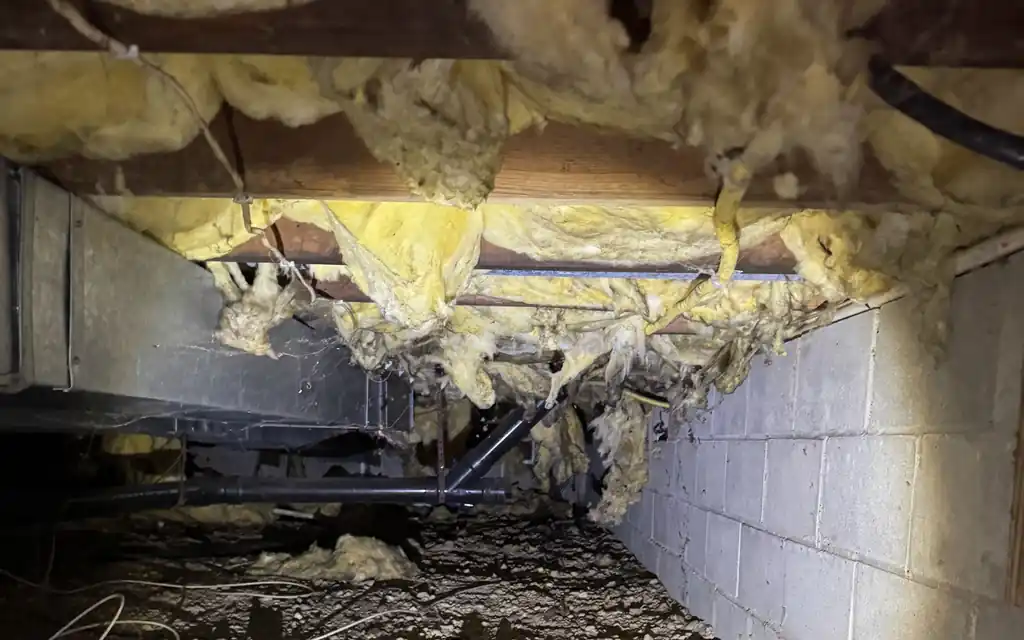
Crawl space with insulation pulled down from the joists and a block wall
Starting where they shelter
On a visit we go where camel crickets go: corners of basements and crawl spaces, behind stacked storage, the garage perimeter, the sump area, and the outside of the foundation where they gather by day under stones and boards. A light shows their harborage, and we photograph it so you can see how they have been living in the lower level of your house.
Treatment goes at the foundation and into those shelters, and inside along the baseboard and sill lines. Drying the space matters as much, so we flag the dehumidifier, the downspout and the stack of wet cardboard. Children and pets shape how we apply, and organic options can be discussed on the spot.
Because camel crickets wander rather than nest in the living space, the part of the house that gets the least attention often matters most. Window wells, the gap around a basement bulkhead and the track of a garage door all let them through. We show you each opening and which ones a homeowner can seal in an afternoon.
Chapter 03
Fewer leaps, and a tidier garage
Within days you will see fewer. Tidy the garage by lifting boxes off the floor and moving firewood away from the wall; those are hiding places no treatment can remove. A dehumidifier in the basement does a surprising amount of the work, and so does repairing a leaking window well before the rains begin.
If they keep appearing, call (732) 527-5770 and the 100% satisfaction guarantee puts us back in the basement at no cost to you. Wet springs bring a second wave, so a quick check in May is worth it, especially in older Toms River and Brick homes with unfinished basements. The jumpers are most active as the ground warms and the soil begins to dry out.
Licensed & insured · NJ LIC# 91689B · 100% satisfaction guarantee
CROSS-REFERENCE · NJ LIC# 91689B
Found alongside camel cricket control
Cricket Control
Chirping in the walls at night, stopped at the foundation and the door sweeps.
Centipede & Millipede Control
Damp basements and crawl spaces bring them in; dry them out and treat the perimeter.
Crawl Space & Basement Pest Control
The dark, damp places pests live first, inspected with a light and photographed.