Finding · Groundhogs
Burrows under the shed, stopped before the slab shifts
A big dirt mound beside the shed, a tunnel mouth by the foundation, a garden stripped overnight. Resolve traps the groundhog and secures the burrow.
Chapter 01
A dirt fan by the shed, a tunnel mouth, a garden gone by morning
Groundhogs announce themselves with fresh soil. A broad fan of dirt beside a shed or porch, a hole a foot wide with a smooth, worn lip, a vegetable bed chewed to the stem. They like open ground near cover, which describes most backyards in Pemberton, Jackson and Freehold. The hole is usually the size of a dinner plate, and a second exit is usually hidden under a bush or a shed edge.
A burrow is more than a hole. Tunnels run several feet and sometimes under slabs, sheds and foundation footings, and a heavy animal digging daily can undermine the soil that holds them up. A shifting shed floor or a patio with a settling corner may be the first structural clue. Those are the problems that grow quietly, so an early call is cheaper than a slab repair later.
Early morning and late afternoon are when you will see one, standing upright at the mouth of the burrow or feeding along the fence line. If it keeps returning to the same hole, the burrow is active, and the sooner the technician sees it the simpler the job. Take a photo from a distance if you can, and note which hole it uses.
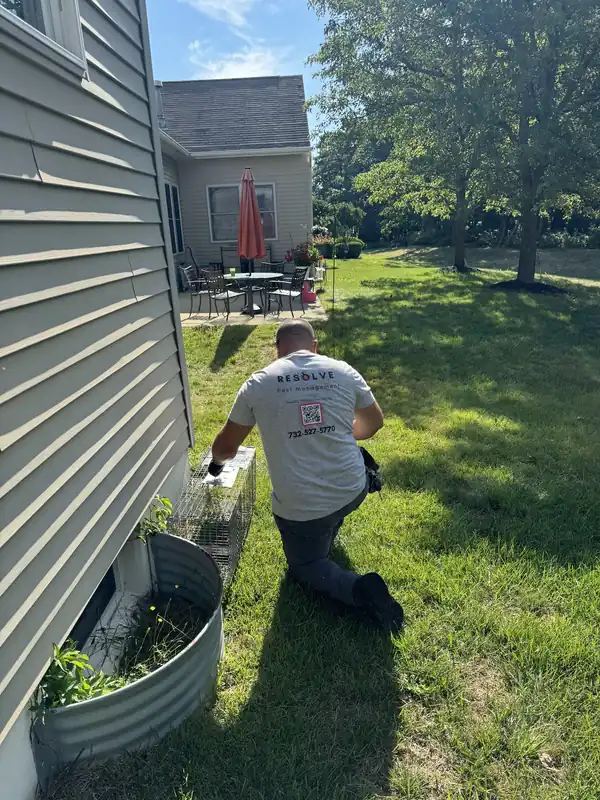
Resolve technician kneeling at a live-catch trap beside a house foundation
Mapping the burrow, trapping at the main door, and what gets filled
The technician starts by locating every opening and deciding which is the main door, since groundhog burrows usually have several. A live-catch cage trap goes at the active entrance, placed so the animal approaches naturally, and checked on a regular schedule. Groundhog removal is one of the six wildlife services Resolve handles. Resolve's crew checks the surroundings so the trap is not placed where children or dogs will disturb it.
Once the animal is trapped, the burrow is dealt with in a sensible order. Openings are not filled while anything could still be inside, and the technician explains how a barrier along the foundation or shed edge keeps a new animal from reusing the tunnels. The technician explains what was found around the burrow and what was done, so nothing happens out of your sight.
Fences and garden protection are discussed too, because a gap in a fence line, or a vegetable patch that looks like a buffet, will attract a replacement. A buried apron along a fence base costs little next to a bed of lost tomatoes. Even a modest barrier discourages a new tenant from digging in, and a few inches of buried wire does a surprising amount of work.
Chapter 03
Settling soil, return visitors and the autumn check
After the work, watch for settling around the burrow and report anything that sinks. A technician can advise whether the ground needs filling or compaction and whether the shed or slab deserves a closer look from a contractor before the next heavy rain. Heavy rain finds weaknesses in disturbed soil, so the weeks after a removal deserve a walk around the foundation.
If another groundhog shows up and you are not satisfied, the 100% satisfaction guarantee means Resolve returns and retreats at no additional cost. Groundhogs do come back to good real estate, so a quick call at the first fresh dirt beats waiting for a full tunnel system. It is a quick conversation, and the same guarantee applies to wildlife work as to insects.
Autumn is a good moment for a boundary check, before animals look for winter dens. Call (732) 527-5770; Resolve is family owned, licensed and insured under NJ LIC# 91689B, with an office on Atlantic City Blvd in Bayville. Burrows also give shelter to other animals once vacated, so closing them properly matters for the whole neighborhood. Resolve is family owned, and the office takes calls at any hour.
Main entrance trapped, burrow dealt with in the right order.
CROSS-REFERENCE · NJ LIC# 91689B