Finding · Moths and beetles in food
Pantry pests: the flour is where it started
Moths and beetles in cereal, flour and pet food come in with the groceries. We find the source, show you what to clear out and treat the shelves.
Chapter 01
Tiny moths over the cereal shelf
A Manahawkin or Howell homeowner often finds out when a little brown-and-copper moth flutters out of the cabinet, or when a bag of flour has gone clumpy with silk-like webbing. Others see tiny reddish beetles crawling in rice, or larvae wriggling in a box of crackers. These are pantry pests: Indian meal moths and several beetles that live in stored dry food.
They arrive in the food itself. Eggs are already in a bag of birdseed, pet kibble or dried fruit when it comes home from the store, and they hatch in the warm cupboard. Webbing in the corner of a package, holes chewed through cardboard, and larvae climbing the wall toward the ceiling in search of a place to pupate are the tell-tale signs.
Pet food, birdseed, dried herbs, spices, baking mixes and chocolate are all fair game. The pests are not dirty-house pests: a spotless kitchen in Manahawkin can host them as easily as a cluttered one, because the eggs ride home from the store inside the packaging. Finding them says something about the groceries, not about housekeeping.
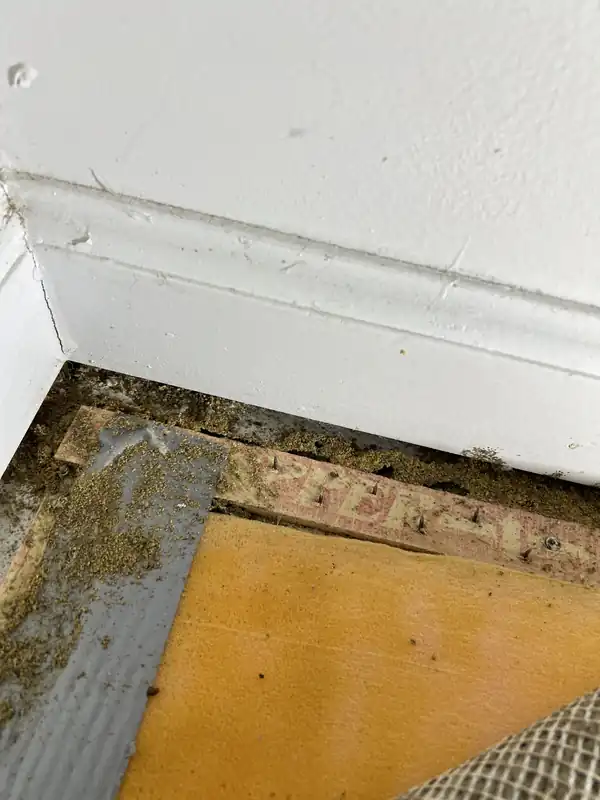
Baseboard gap packed with droppings and debris
Hunting the source package by package
Treating a shelf without removing the infested food just feeds the problem, so the visit starts with the pantry itself. We inspect cabinets, shelf corners, the underside of shelves and the crack where a shelf meets the wall, along with pet food storage and the supply bin in the garage, using a light to catch webbing.
You do the throwing out; we point at what to bag and discard, and show you how to check unopened packages. Then we treat cracks, crevices and shelf edges, not the food. Nothing is applied to surfaces that touch food, and the Organic Pest Program can be requested if you prefer.
The wandering larvae that climb to the ceiling and pupate in corners far from the shelf are the reason a vacuum and a wipe-down of the whole cabinet matters. Hard plastic or glass containers with a tight lid come next, because moths chew through bags and thin cardboard but not through glass. Labeling the lid with the purchase date makes the next cleanout a thirty-second job instead of an afternoon.
Chapter 03
Keeping them out of the next bag of flour
Check for a fresh outbreak a couple of weeks after clearing out, since eggs in a missed package can hatch later. Date what you buy, use older items first and store whole grains and pet food sealed. Freezing new bags of flour or birdseed before shelving them stops most introductions.
If moths are back after service, call (732) 527-5770. The satisfaction guarantee covers a free retreat, and we go through the shelves again with you until we find the package that was missed. Pet food and birdseed stored in the garage are the usual culprits when the kitchen is clean.
No product on food surfaces · Licensed & insured · NJ LIC# 91689B
CROSS-REFERENCE · NJ LIC# 91689B